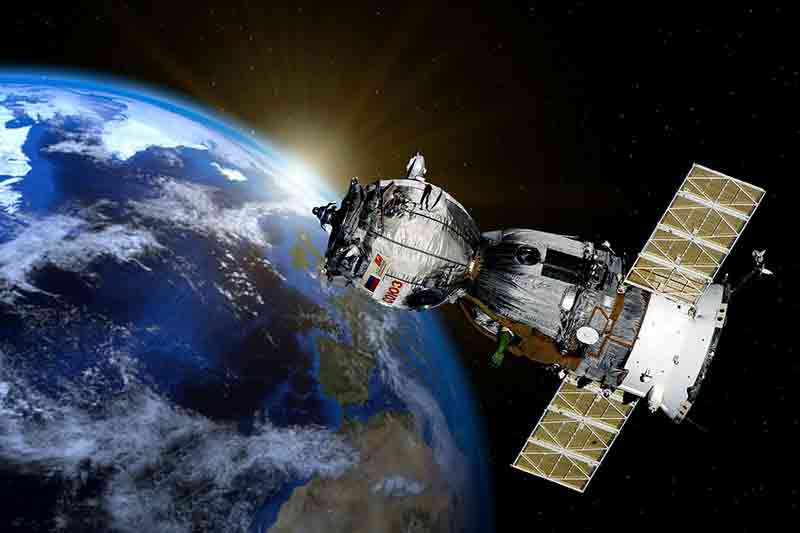
The professor friend of mine pointed me to an interesting article the other day, and I thought it’d be worthwhile sharing its content, as it is so relevant in our time geopolitical trends. When we speak about location services and global navigation, whether in our cars, on planes, or anywhere else, we naturally think of GPS, the Global Positioning System. The term and its usage have become second nature to us, and all our lives seem to increasingly be depending on its services.
We hardly think about GPS actually being run by the US Air Force, let alone the fact that we rely on the US government to be able to use it. Other jurisdictions have woken up to this and established their own systems and standards rivalling GPS. The EU, for example, created the Galileo global navigation satellite system that went live in 2016, operating a total of 30 satellites in orbit. Galileo commands this feature of using navigational satellites from other networks beyond GPS, which is meant to increase receiver accuracy and reliability.
However, the jury is still out to what extent Galileo’s GNSS system works together with GPS and whether Galileo will ever be able to step up and compete with the much more widely established GPS system. What is more important in the context of geopolitical decoupling is what China has been up to in this field. As the article states, the Beidou navigation network, as it is being called, took shape in the 1990s as the Chinese military sought to reduce its reliance on America-owned GPS.
The first Beidou satellites were launched in 2000 for the purpose of covering China. In 2003, China tried to join the Galileo effort for global coverage, but eventually, no deal was struck and Beijing focussed on developing Beidou in isolation. And the Chinese have come a long way. When mobile devices began to dominate our daily communication, the second generation of Beidou satellites went operational in 2012, covering the Asia Pacific, and the third generation was deployed in 2015 for global coverage.
What people don’t seem to realise is that China will be launching its 35th satellite this month and eclipse GPS’, Galileo’s and Russia’s navigation system’s numbers. Massive investment is flowing into Beidou. When completed, the system’s location services will be accurate down to 10cm in the Asia Pacific region, compared to 30cm delivered by GPS. Needless to say that for military purposes these are material differences.
Decoupling the globe is not only taking the shape of splitting up and relocating industrial supply chains but it also reaches into orbit. Beijing is obviously marketing Beidou-related services into other countries, mostly those along the Belt and Road. Expanding China’s ecosystem beyond its borders does include space. Washington had already warned last year that Beijing promoted launch services, satellites and the Beidou network under what has been dubbed the “Space Silk Road”.
Let’s not kid ourselves. China has never given the impression that decoupling is in its interest or being desired. It is a thought construct born among Washington hawks. Beijing is reacting to this perceived threat and staking its turf. The leadership has made its grave experiences with what it means to have key industries targeted by US sanctions and export bans. If it ever was the Trump administration’s intention to hold China’s progress back, it may be backfiring before their eyes.
It is barely called Made in China 2025, the ill-conceived propagation of making the country self-reliant on high-tech manufacturing, any longer, but the threat of decoupling has indeed put Beijing’s foot on the gas pedal. As with other industries, Beidou has long become the dominant service provider in China, as it is destined to become equally dominant in Asia, the rest of the Eurasian plate and Africa. The gauntlet has been thrown down, and the race for influence is on.